
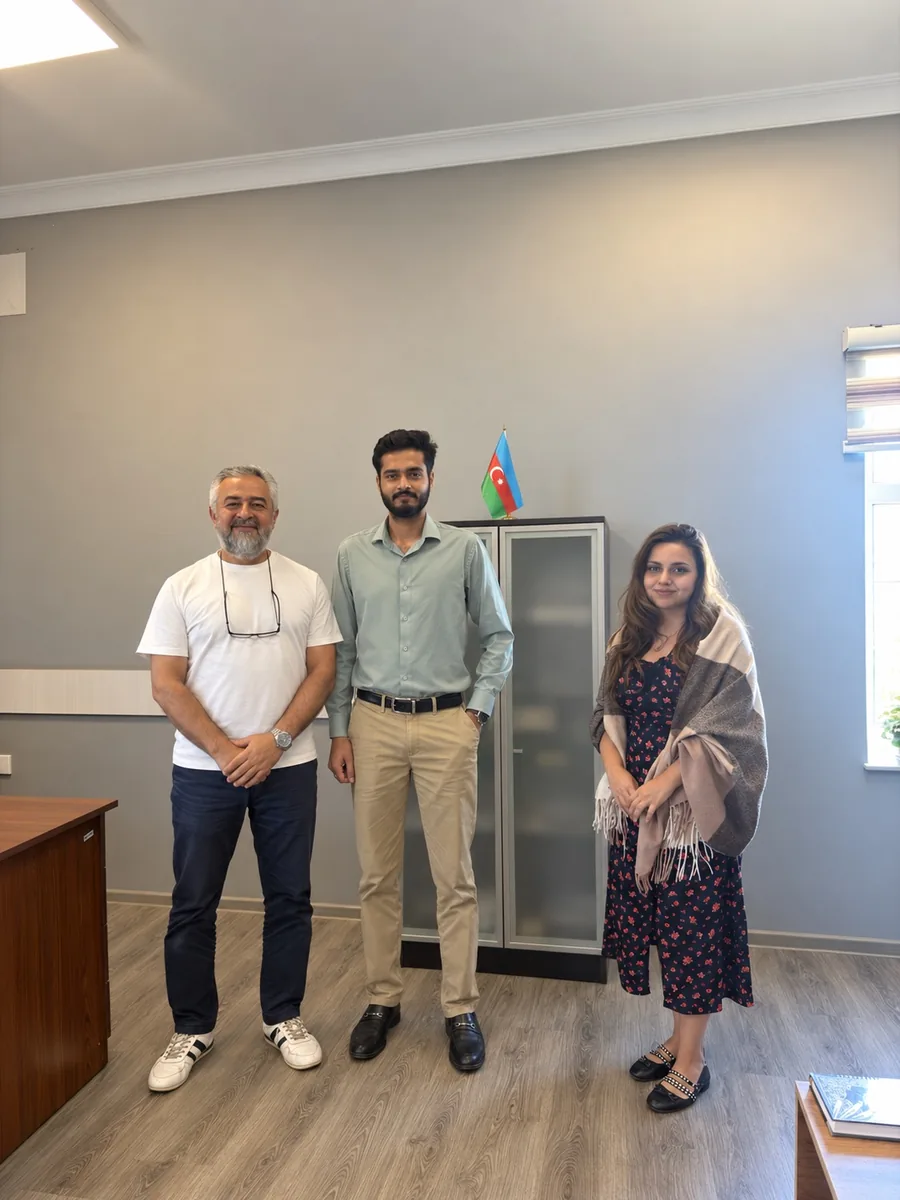
The meeting
IRHA APPARELS Managing Director Daim Ali met representatives of Terra Pharm, including Ms. Chynara, in Azerbaijan on 2 September. Their discussion concerned hospital uniforms.
The company and the meeting participants
IRHA’s account identifies the participants as representatives of Terra Pharm, including Ms. Chynara. The male participant’s name and an independently confirmed executive title are not added. Available company descriptions place Terra Pharm in Azerbaijan’s medical-supply sector; its indexed textile offering includes medical clothing. This gives relevant business context, while the exact current role and preferred full spelling of Ms. Chynara remain unconfirmed. No private contact details or speculative personal biography are needed to explain the apparel opportunity.
Potential collaboration: specification-led uniform sourcing
Potential future discussion areas include scrub sets, laboratory coats, department uniforms and garment programmes for institutional purchasers. These are proposed areas for exploration, rather than an agreed order list. A buyer serving multiple institutions may need different colours, size ranges and garment specifications for each customer. Keeping those programmes distinct is important: a sample accepted for one institution should not automatically be treated as approval for another, especially where fabric, care or intended-use requirements differ.
Preparing a useful procurement brief
A practical brief should list garment quantities by style and size, fabric requirements, colour references, logo permissions, measurement tolerances and packing instructions. If the enquiry relates to a tender, the original technical clauses should be reviewed line by line. The manufacturer should explain any unsupported specification before submitting a quotation. The buyer and manufacturer also need a clear distinction between ordinary staff clothing and garments sold with protective or clinical-performance claims. Applicable evidence must match the actual product and intended use.
Quality review and commercial next steps
A future project could move through a reference sample, fabric assessment, size approval and a controlled pre-production record. Production checks should be tied to that record, with agreed inspection methods, quantities and presentation before dispatch. Pricing and logistics should be confirmed for the specific shipment rather than inferred from another buyer’s programme. The owner’s numerical tender-win account is not used as a public claim here. The article records the meeting and the potential relevance of medical apparel, without asserting an IRHA supply contract.
Preparing the next commercial conversation
A productive manufacturing enquiry should include the intended product, reference photographs or a tech pack, approximate quantities by style and colour, size breakdown, decoration, packaging and delivery country. Where a choice is unresolved, the buyer should identify acceptable alternatives instead of asking the manufacturer to assume a specification. The resulting quotation should distinguish sample development, bulk production, inspection, packing and freight. This gives both parties a shared basis for comparison and makes later changes visible. It also prevents a meeting photograph or an early discussion from being mistaken for an approved production programme.
Keeping development practical and accountable
IRHA APPARELS works from Sialkot, Pakistan, on OEM, ODM and private-label apparel enquiries. Any potential programme described here remains subject to material availability, product feasibility and written commercial agreement. Sample observations should be documented against the same measurement table and artwork version that will guide production. For subsequent orders, the team should recheck materials, quantities and timing instead of relying on an old quotation. Buyers can request a manufacturing discussion through the official company channels and share the actual requirements of their business. The purpose of this journal is to provide context for direct business engagement and help the reader understand how a conversation could develop into a properly specified apparel project.
Discuss your apparel requirements →