
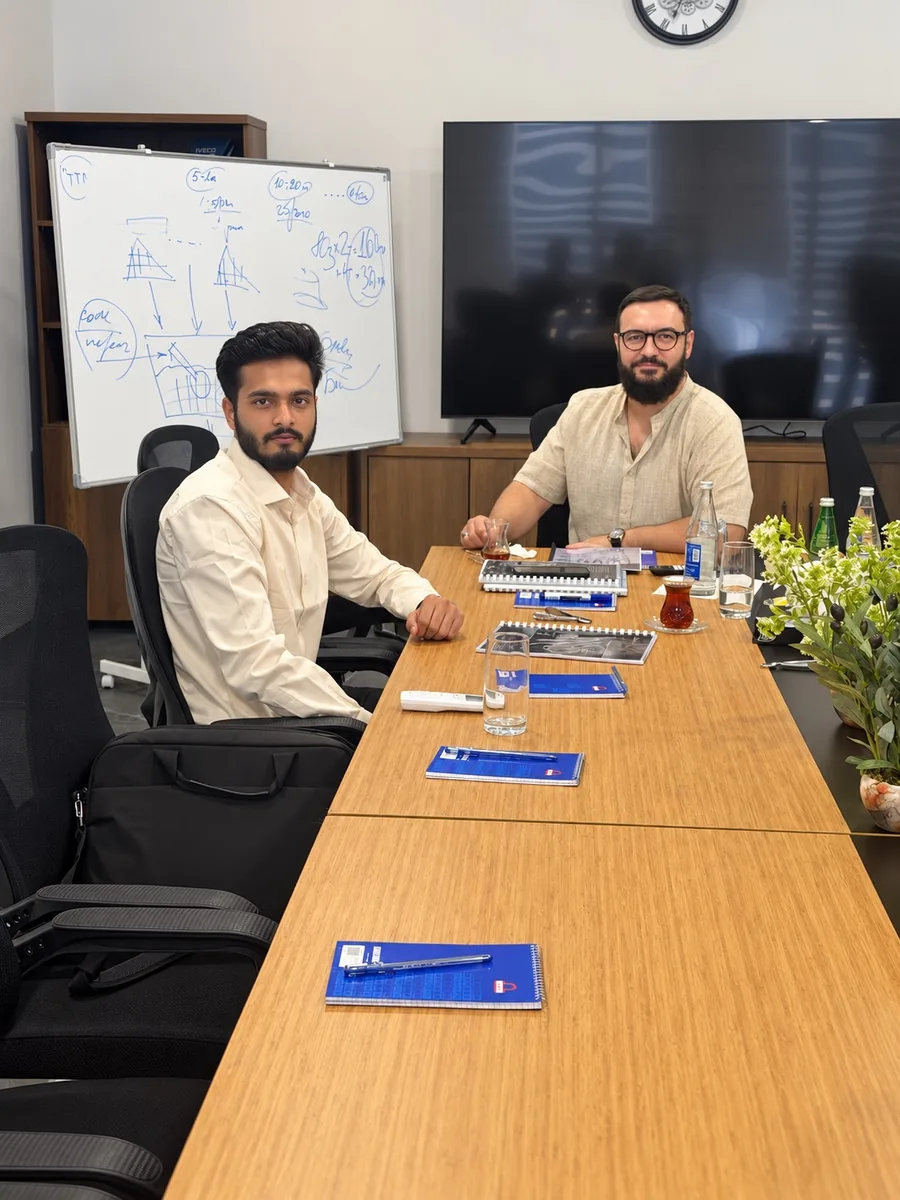
The meeting
IRHA APPARELS Managing Director Daim Ali met Dr. Rustam in Baku on 7 September to discuss medical gowns and clothing required in hospitals. The meeting formed part of IRHA’s direct conversations with professionals working in Azerbaijan’s healthcare sector.
Professional context
Dr. Rustam met Daim Ali as a healthcare-sector contact in Baku. IRHA’s account identifies him as a surgeon connected with an ambulance business. His full professional identity and the company’s official name have not yet been independently confirmed, so this article keeps the first-name identification used for the meeting. The useful commercial connection is the hospital-clothing requirement recorded by IRHA: translating an institution’s everyday garment needs into a clear manufacturing brief, rather than assuming that all medical textiles serve the same purpose.
Potential collaboration: hospital clothing programmes
Possible next-stage discussion areas include staff uniforms, scrub tops and trousers, laboratory coats, patient garments and suitable non-protective gowns. These are potential project areas, rather than an agreed product list from the meeting. The first decision would be who wears each garment and in what setting. A ward uniform, reception outfit and garment intended for an operating environment can require different construction and assessment. An institution should specify intended use before fabric, design or pricing decisions are made.
Fabric, fit and laundering considerations
A practical uniform brief could compare fabric composition, weight, opacity, hand feel, colour consistency and ease of care. Pocket layout, movement through the shoulder and seat, trouser rise, closures and size coverage are equally important to wearers. Before adopting a garment across a hospital, the buyer should assess a sample through its intended laundering process and check measurements afterwards. Wash temperatures, shrinkage tolerances, colourfastness and any institutional requirements need written agreement; a comfortable sample alone does not establish clinical or protective suitability.
A structured route from enquiry to sample
A useful follow-up would start with reference photographs or a technical specification, quantities by garment and size, colour references, branding and delivery destination. IRHA could then review manufacturability and prepare a project-specific quotation. Sample comments should be collected into one revision record so pocket changes, measurements and labels are not lost across messages. Any protective, barrier, sterile or regulated-use claim would require the applicable specification and supporting evidence before an offer is represented as compliant.
Preparing the next commercial conversation
A productive manufacturing enquiry should include the intended product, reference photographs or a tech pack, approximate quantities by style and colour, size breakdown, decoration, packaging and delivery country. Where a choice is unresolved, the buyer should identify acceptable alternatives instead of asking the manufacturer to assume a specification. The resulting quotation should distinguish sample development, bulk production, inspection, packing and freight. This gives both parties a shared basis for comparison and makes later changes visible. It also prevents a meeting photograph or an early discussion from being mistaken for an approved production programme.
Keeping development practical and accountable
IRHA APPARELS works from Sialkot, Pakistan, on OEM, ODM and private-label apparel enquiries. Any potential programme described here remains subject to material availability, product feasibility and written commercial agreement. Sample observations should be documented against the same measurement table and artwork version that will guide production. For subsequent orders, the team should recheck materials, quantities and timing instead of relying on an old quotation. Buyers can request a manufacturing discussion through the official company channels and share the actual requirements of their business. The purpose of this journal is to provide context for direct business engagement and help the reader understand how a conversation could develop into a properly specified apparel project.
Discuss your apparel requirements →