
Low-MOQ Clothing Manufacturing: Order Planning for UK Brands
Plan a low-MOQ clothing order by style, colour and size. Understand material minimums, sample costs and repeat-order decisions before committing.
What a low minimum actually means
Searching for a low MOQ clothing manufacturer is a reasonable starting point for a UK brand testing a collection. The number on a supplier's website, however, is only useful when you know what it applies to. A minimum might apply to a complete order, an individual style, each colour or a fabric purchase. These are very different commitments.
This guide focuses on order structure rather than repeating a general quotation checklist. IRHA APPARELS is based in Sialkot, Pakistan. It offers made-to-order manufacturing for international business buyers, not UK-made production or guaranteed stock in the UK.
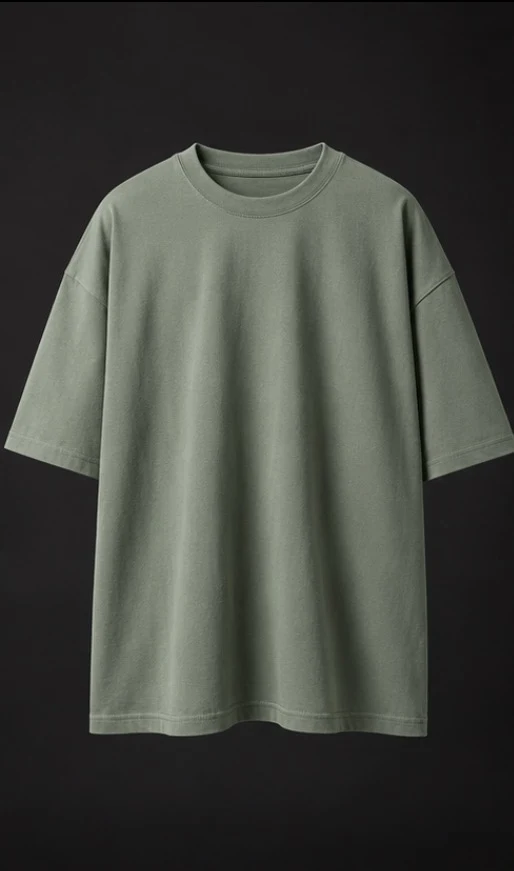
Oversized T-Shirt
Product reference from the IRHA catalogue. Final construction and materials are agreed before production.
 View product reference
Calculate the minimum at style-and-colour level
Start with a simple matrix: styles down the left, colours across the top, and proposed quantities in the cells. Under IRHA's usual planning basis of 50 pieces per style and colour, two styles in three colours would imply six production groups. At 50 pieces each, the illustrative total is 300 garments—not 50 garments spread across the whole collection.
That calculation is a planning example, not confirmation that every fabric or construction is available at that minimum. Ask whether size mixing is possible within each group and submit the exact size split. Do not assume that replacing one colour with a different fabric preserves the same production arrangement.
If 300 garments exceed your test budget, consider fewer style/colour combinations. Concentrating the opening order can make stock decisions easier without asking the manufacturer to hide production costs.
Identify the component that controls your order
The sewing quantity may be manageable while another component requires a larger purchase. Custom fabric colours, special hardware, woven labels or bespoke packaging can have their own sourcing constraints. Ask which components are available as standard options and which require separate development or purchasing commitments.
Record what happens to any unused material or packaging: who pays for it, where it is held, and whether it can be used for a later order. Do not treat unspecified excess material as free future stock.
For a pilot collection, you might compare an available fabric colour with a custom-colour option while keeping the fit and branding consistent. The manufacturer should quote the alternatives clearly so that the commercial trade-off is visible.
Keep sample cost separate from bulk unit cost
A development sample can require pattern work, material sourcing, decoration setup and revisions for a single garment. Its price therefore answers a different question from the price of a repeatable bulk unit. Ask what the sample quotation includes and whether further revisions are charged separately.
Do not assume that development fees are refundable or credited against production unless the agreement explicitly says so. Record courier costs separately and agree the approval process before commissioning the sample.
For your internal comparison, spread confirmed one-off development expenditure across the planned opening quantity. Then calculate a second scenario at your realistic reorder quantity. This shows whether the economics depend on repeat business that has not yet been proven.
Choose the size assortment from evidence
A balanced spreadsheet is not necessarily a good size assortment. Use actual pre-orders, prior sales or a defined buyer profile where you have them. If reliable evidence is unavailable, label the size allocation as a test assumption and record how you will evaluate it.
Ask for finished-garment measurements and a consistent measuring method. A letter size such as M does not define the same fit across all suppliers. Confirm whether grading changes only width or also length, sleeve and other relevant dimensions.
Separate fit approval from demand forecasting. A perfectly made size may still sell slowly if the assortment does not match your customers. Keep those two risks visible rather than attributing every stock problem to manufacturing.
Work backwards from your actual selling window
Your selling date is not the same as the factory dispatch date. Allow for specification decisions, sample development, review, corrections, bulk approval, production and transportation. Build the schedule around confirmed milestones and identify which decisions the buyer must provide on time.
IRHA's usual sample-development planning range is 7–10 days; bulk production is typically 17–24 days after required approvals. These are conditional manufacturing estimates, not a guaranteed UK arrival date. Material sourcing and revisions may change the programme. Confirm shipping and receiving arrangements for the actual order rather than adding an assumed transit time.
Use a reorder decision before adding more styles
After receiving the first order, compare fit feedback, sell-through by size and colour, actual landed expenditure and supplier consistency. A successful opening style may justify a repeat before a broader collection does. Keep the approved sample, specification and artwork version so the second order has a clear reference.
To request an IRHA quotation, send the style/colour matrix, quantities, size split, technical files, branding requirements and UK delivery postcode. Ask the manufacturer to identify the binding minimum, exclusions and unresolved decisions. A useful low-MOQ arrangement is one the buyer can finance, sell and reproduce with confidence.
Prepare the technical pack
Continue with the relevant manufacturing guide or submit your project details.
Prepare the technical packExplore the apparel catalogue
Continue with the relevant manufacturing guide or submit your project details.
Explore the apparel catalogueDiscuss your order structure
Continue with the relevant manufacturing guide or submit your project details.
Discuss your order structure