
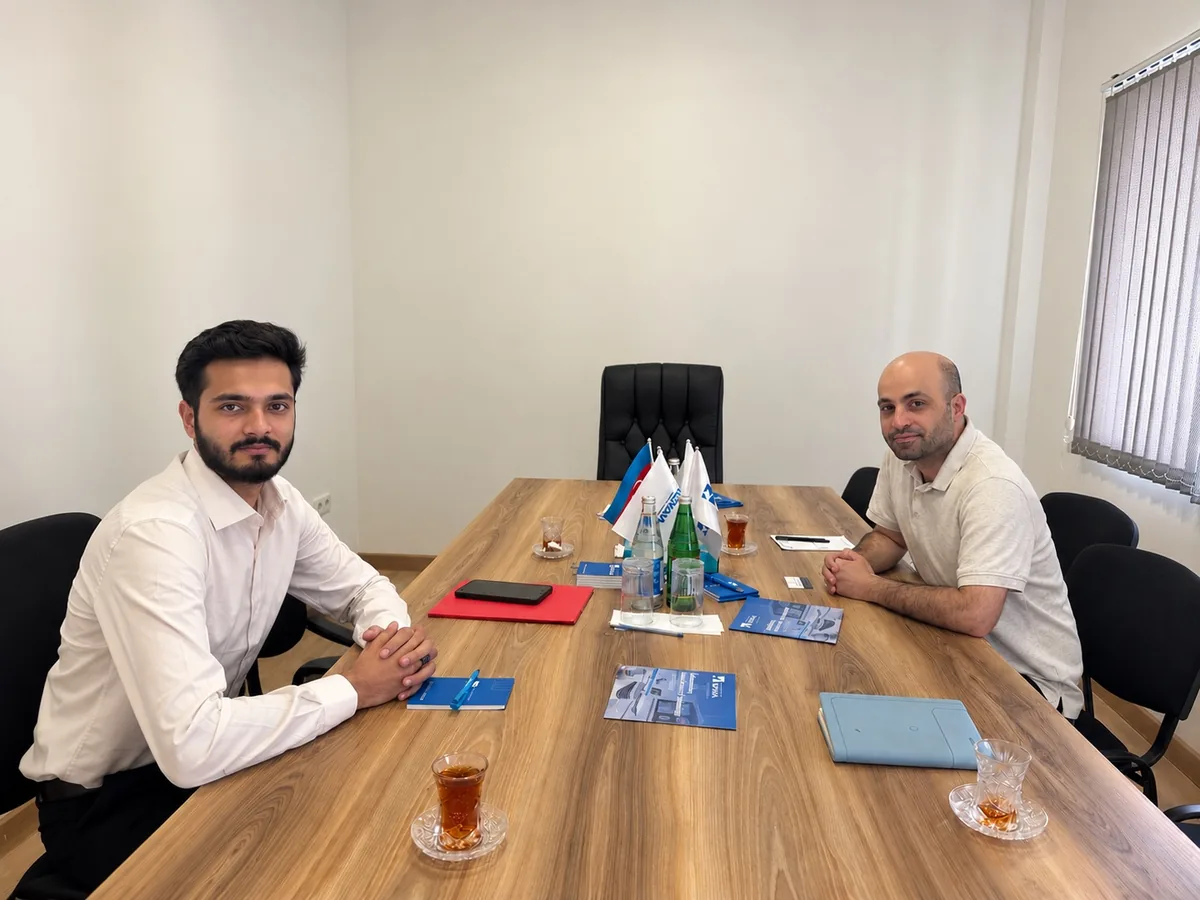
The meeting
Daim Ali met Mr. Farid of Viva Med in Baku on 24 August to discuss hospital uniforms. The conversation brought IRHA’s apparel-manufacturing focus into a healthcare procurement setting.
About Mr. Farid and Viva Medical
The guest is identified as Mr. Farid of Viva Med. He is a different person from the archery-federation contact featured elsewhere in this journal. Viva Medical Group’s official company profile says the business began operating in 2009 and describes medical, laboratory and orthopaedic divisions. That healthcare-supply setting gives context to IRHA’s hospital-uniform discussion. A full-name match and preferred current job title have not been independently confirmed, so the article uses the approved first-name identification.
Potential collaboration: uniforms for institutional buyers
Potential follow-up subjects include scrub sets, staff coats, reception uniforms and garments for different hospital departments. These possibilities are an editorial development agenda, not a claim that Viva Med requested every item. A supplier working with institutions may need to collect requirements from several departments before requesting a manufacturing quotation. Separating those requirements by wearer, garment type, quantity and intended use creates a more useful enquiry than treating an entire hospital’s clothing needs as one standard uniform.
Product development for daily working conditions
Uniform development should connect appearance with practical use: mobility, pocket access, closures, fabric opacity and repeated care all deserve assessment. Department colours and size identification can support a coordinated wardrobe, provided the institution approves the scheme. Samples should be checked by intended wearers and against the buyer’s laundering process. Requirements for fluid barriers, protective performance or sterile use need their own specifications and evidence; they should not be inferred from the fact that a garment is intended for a healthcare customer.
Procurement documents and sample approval
A possible next step would be a consolidated specification showing garment designs, materials, sizes, quantities, artwork, labels and packing. Where procurement is tender-based, the manufacturer should work from the actual tender requirements and identify exceptions before quoting. A commercial offer should state scope, sampling, inspection, delivery point and responsibilities clearly. Approval should refer to a dated sample or controlled specification. The meeting itself documents a uniform discussion and does not establish a tender award, a hospital customer or an accepted order.
Preparing the next commercial conversation
A productive manufacturing enquiry should include the intended product, reference photographs or a tech pack, approximate quantities by style and colour, size breakdown, decoration, packaging and delivery country. Where a choice is unresolved, the buyer should identify acceptable alternatives instead of asking the manufacturer to assume a specification. The resulting quotation should distinguish sample development, bulk production, inspection, packing and freight. This gives both parties a shared basis for comparison and makes later changes visible. It also prevents a meeting photograph or an early discussion from being mistaken for an approved production programme.
Keeping development practical and accountable
IRHA APPARELS works from Sialkot, Pakistan, on OEM, ODM and private-label apparel enquiries. Any potential programme described here remains subject to material availability, product feasibility and written commercial agreement. Sample observations should be documented against the same measurement table and artwork version that will guide production. For subsequent orders, the team should recheck materials, quantities and timing instead of relying on an old quotation. Buyers can request a manufacturing discussion through the official company channels and share the actual requirements of their business. The purpose of this journal is to provide context for direct business engagement and help the reader understand how a conversation could develop into a properly specified apparel project.
Discuss your apparel requirements →